// FIELD NOTE #01 · 2021  · 6 min

La Folie Végétale

Gamification

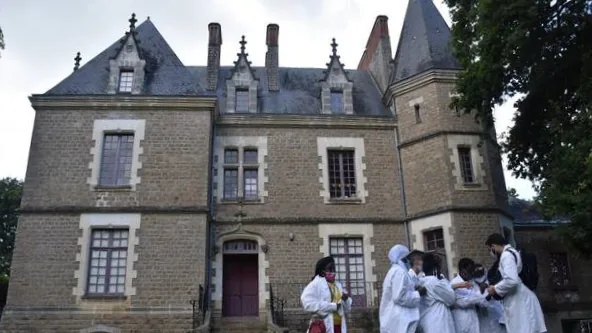
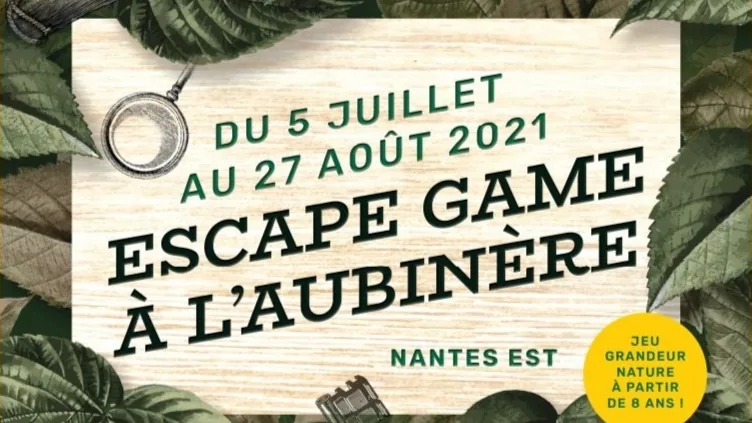
La Folie Végétale is a free escape game created for the summer 2021 season of a Nantes community center, played in a château and its grounds. As project lead, game designer and narrative designer, I carried the project for 3 and a half months, from concept to handoff for live operations.

La Folie Végétale
// SUMMARY · 90s

For the busy

La Folie Végétale is a free escape game created for the summer 2021 season of a Nantes community center, played in a château and its grounds. As project lead, game designer and narrative designer, I carried the project for 3 and a half months, from concept to handoff for live operations.

↓ skip to deep dive
role
Project Lead + Game Designer + Narrative Designer
team
About ten contributors, multi-community center
engine
Château de l'Aubinière, Nantes
genre
Life-size escape game
length
3 and a half months (January to April 2021)
output
Game ran all summer 2021, sessions consistently fully booked
// DEEP DIVE · process notes

01

Context

Early 2021, a Nantes community center wanted to create a playful project for its summer season, in escape game format. I was hired as a project lead and game designer intern to carry the project from A to Z, over three and a half months.

The team was unusual for this kind of project : about ten contributors from different community centers, in widely different roles, some of whom weren’t there by choice. Others were volunteers but already had a lot on their plate at their home structure, which made the game an “extra project” with low priority. No game design skills on the team apart from mine. Tight budget, like any community-based structure.

It was my first real professional project, and it carried with it a stack of lessons I wasn’t expecting.

02

Process

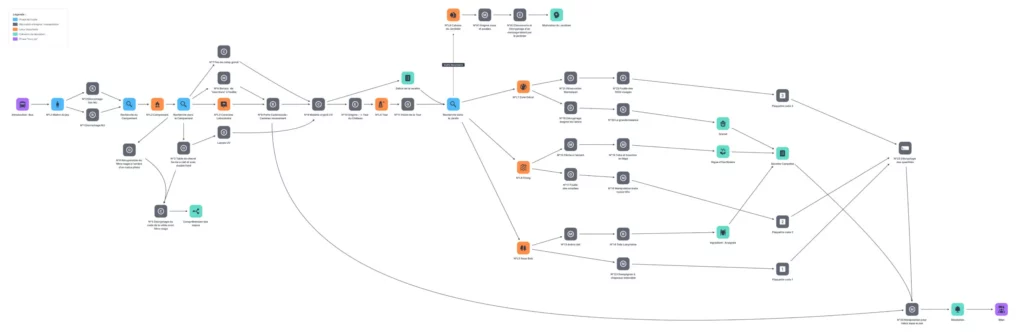
The scenario. The narrative goal was to take families away from their daily lives. I wrote a fantasy universe drawing on the real history of the Aubinière estate : a spell has poisoned the forest, players are scientists sent to investigate and lift the curse. 1h30 sessions, 8 players each, accompanied by a game master in character.

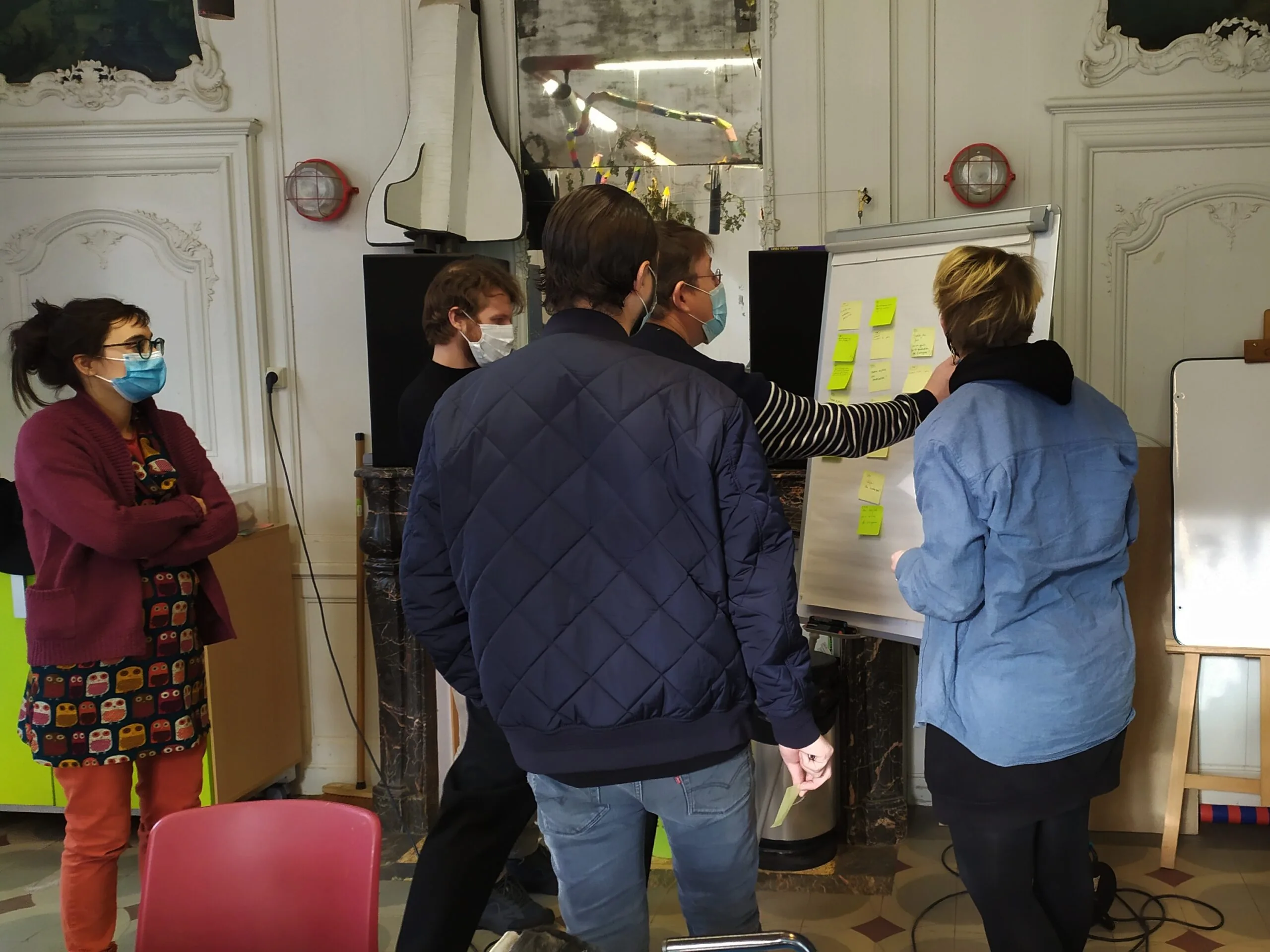
The work method. Given the team’s makeup, I set up a hybrid approach. Agile meetings for decision and co-creation moments, design thinking workshops I facilitated for ideation, and weeklies to share progress. Concretely : the big directions were validated collectively, and between meetings I designed the mechanics on my own before submitting them to the group. It was more efficient for everyone, and respected each person’s actual availability.

Team management. That’s where I learned the most, because it was new to me. Working with people who aren’t from the games industry, who don’t want to be there, or who can’t dedicate much time to it. I had to learn to adapt my vocabulary (no game design jargon that excludes), to manage motivation (show concrete results quickly, make sure each meeting produced something visible), and to calibrate the level of co-creation (involve without overloading). These reflexes still serve me today in agency work.

The budget constraint. A lot of recycling for the game’s physical materiality. Build puzzles with what’s at hand, prototype with cardboard before making the final version, lean hard on resourcefulness. It was formative for design choices (no fluff, every element has to earn its keep).

The handoff. At the end of my internship, the project was taken over by a project manager on civic service for the season’s logistical organization (slots, bookings, animator). So I spent the last weeks documenting : full rules, mechanic sheets, game mastering scenarios, edge cases. A good school for handover work, which taught me to write docs that are actually usable by someone else.
03

Lessons

This first experience gave me foundations I still use today. How to talk design to non-designers, how to lead a non-specialist team without losing them, how to hand a project off so it lives without me. Everything that made my arrival at Albus Factory smooth starts here.

The project ran all summer, sessions fully booked, very positive feedback from players and from the community center. I unfortunately couldn’t be there for the first sessions since my internship ended before opening, but the fact that the game held the run and found its audience remains a concrete source of pride.

It’s also the project that confirmed I wanted to do this work. At 19, watching families have a great time thanks to something I’d designed, that’s what turned an instinct into a career direction.

// next field note
À la Mine →