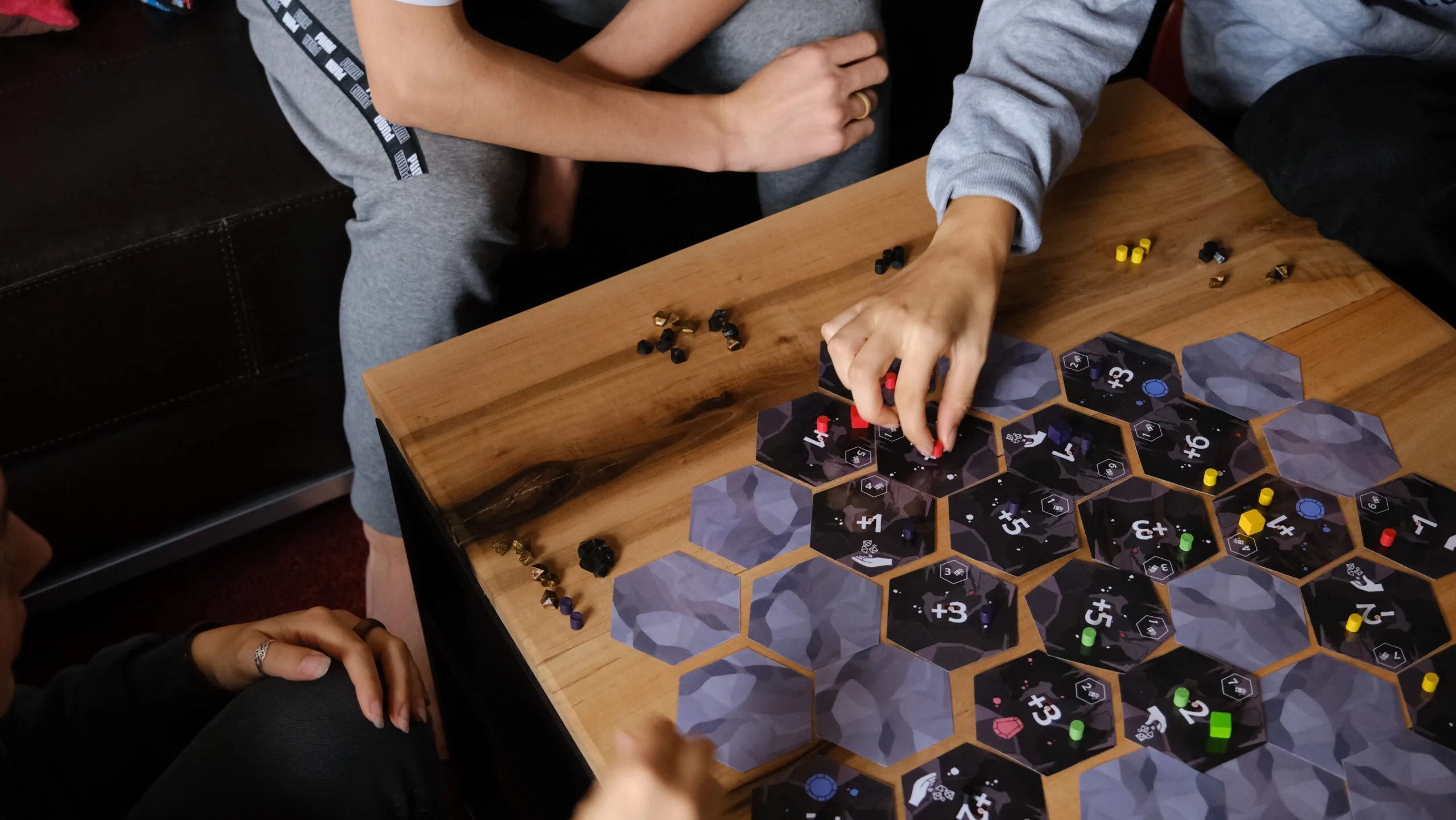
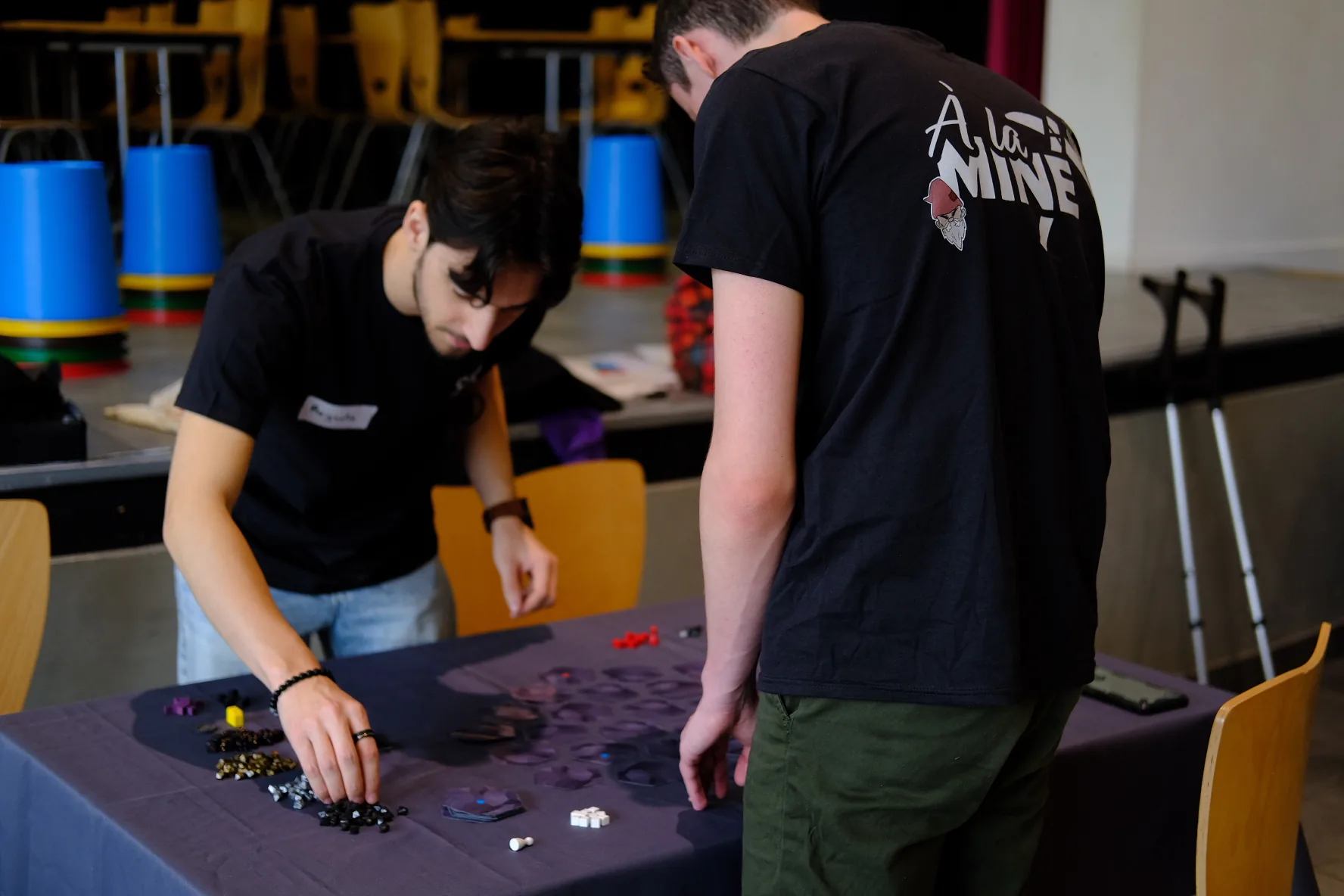
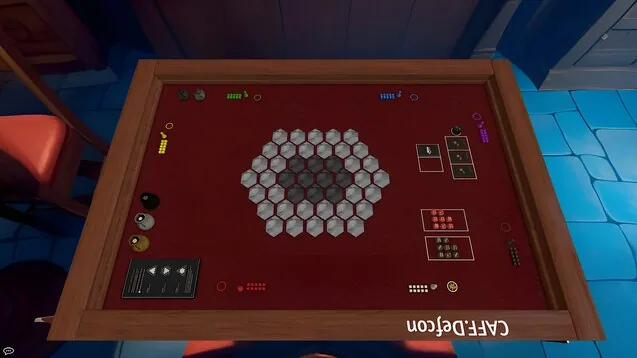
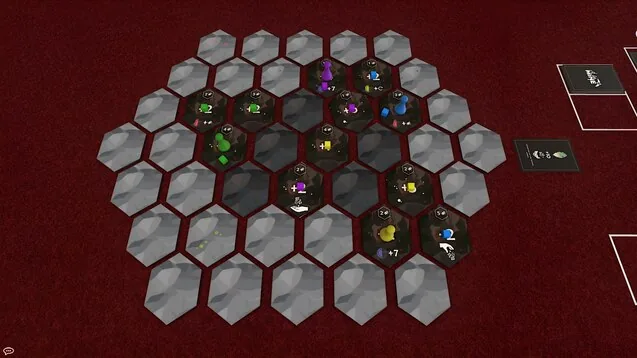
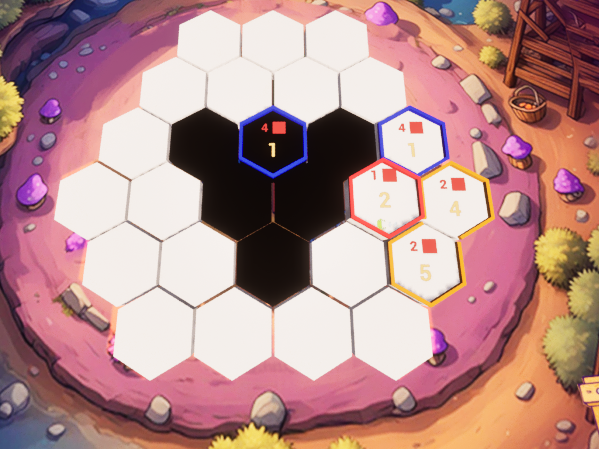
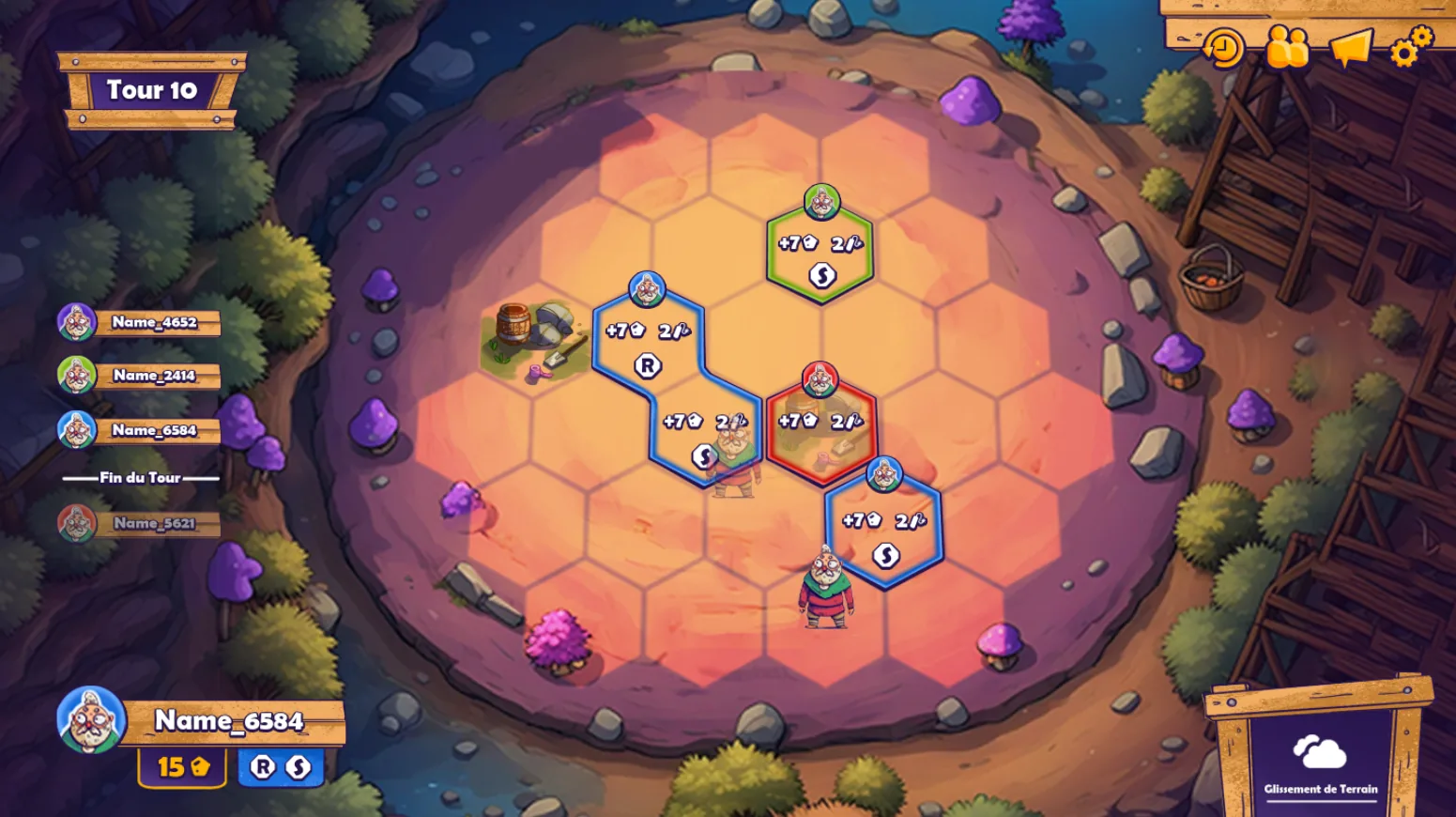
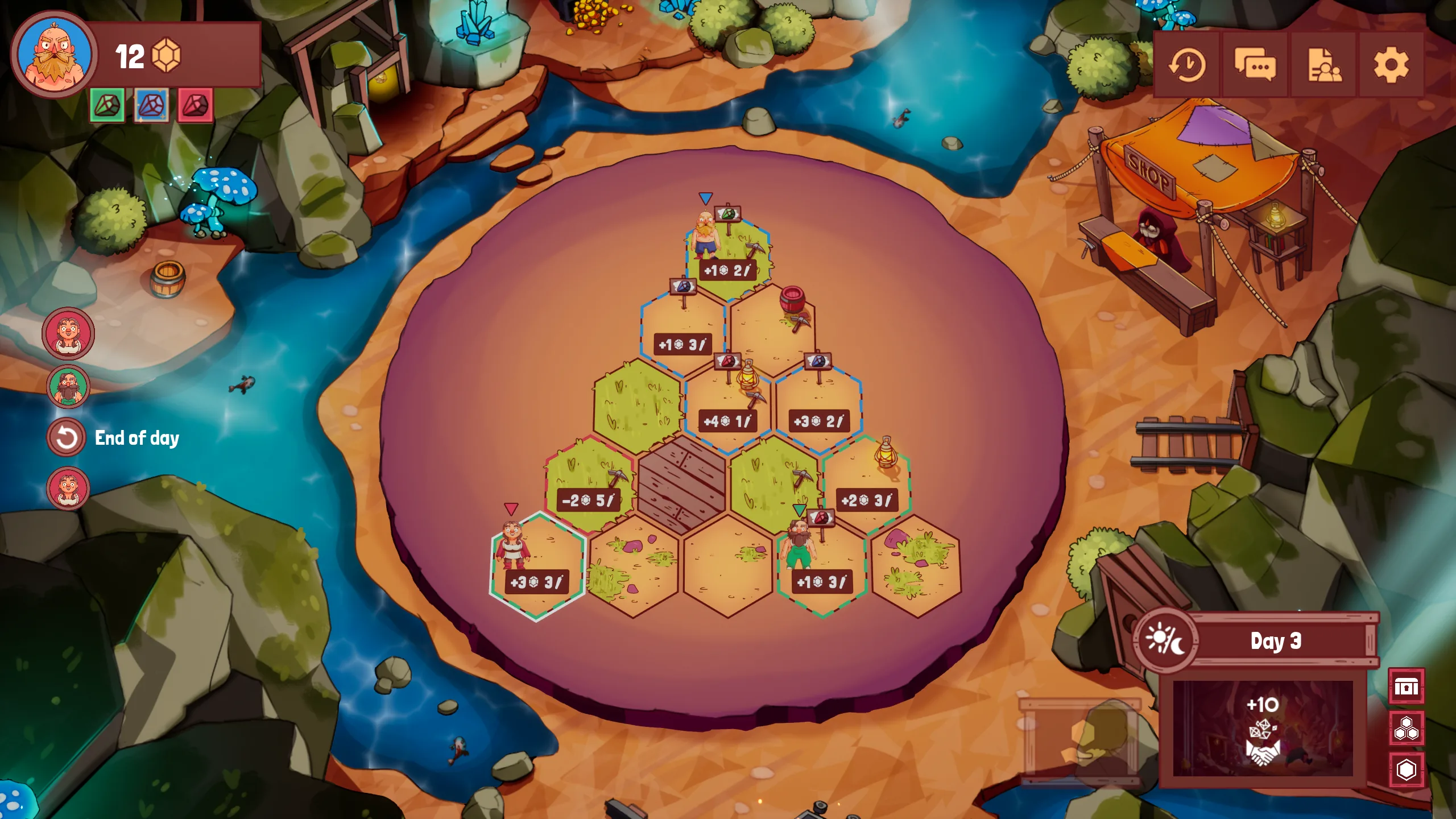
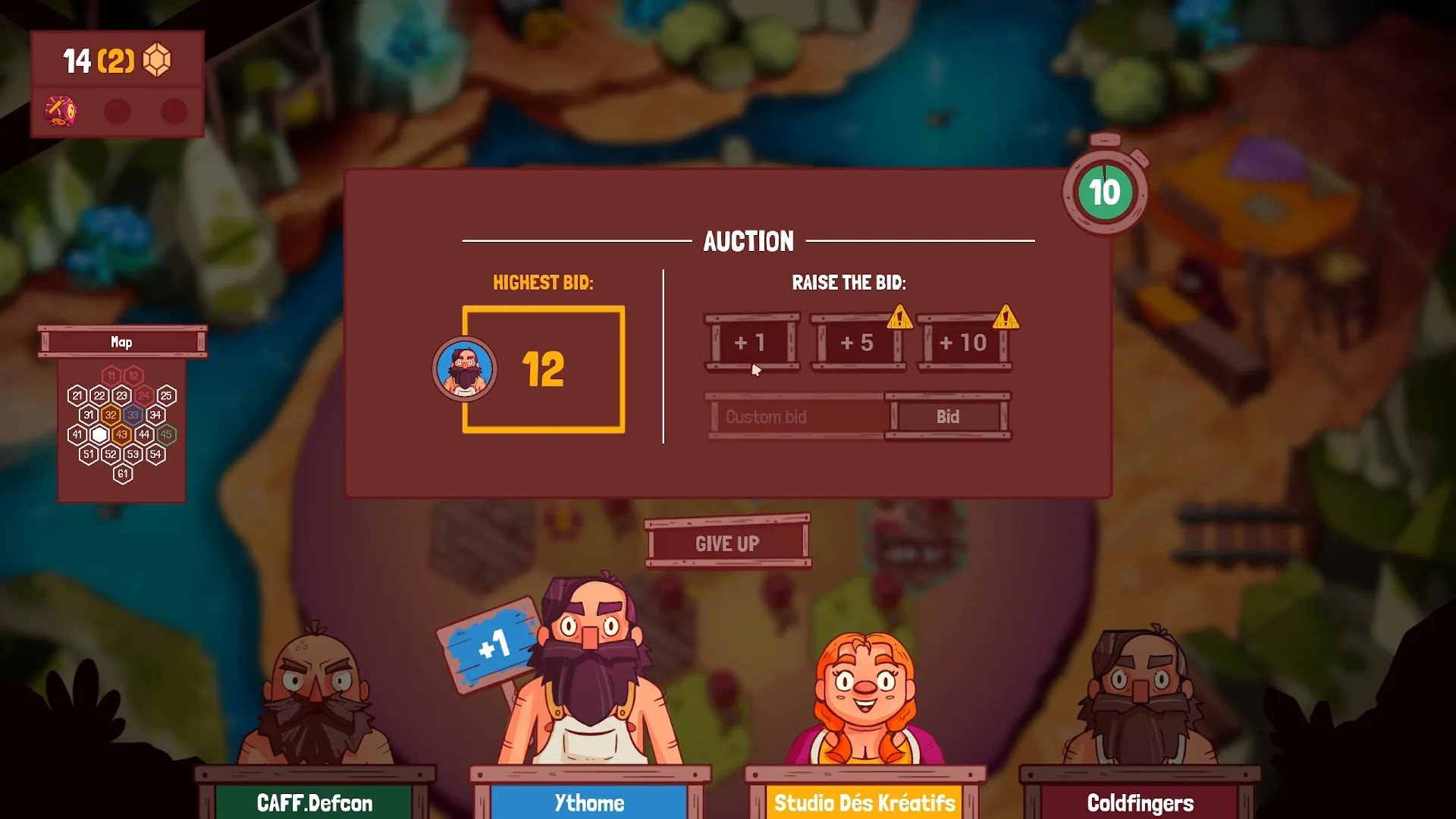
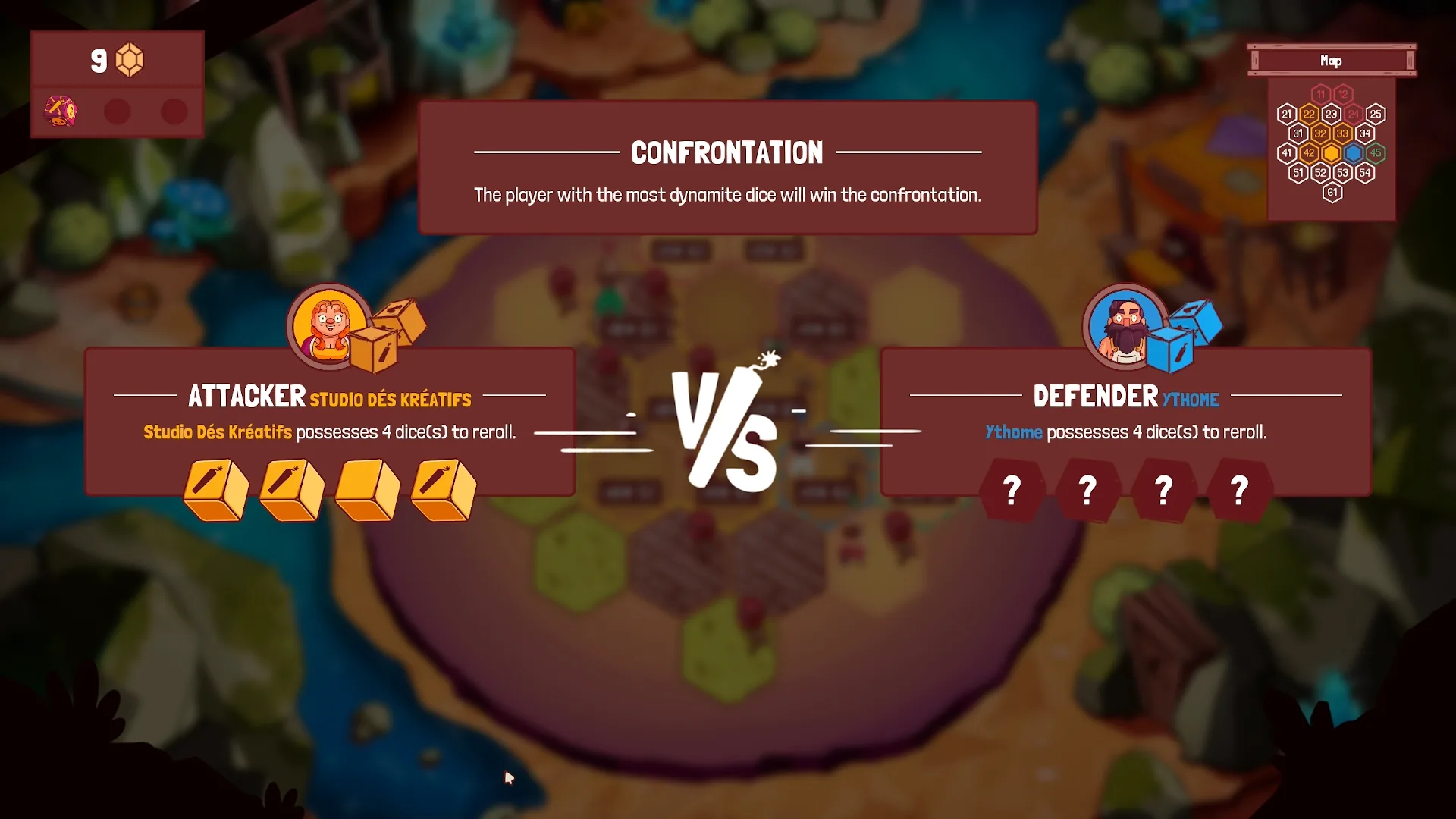
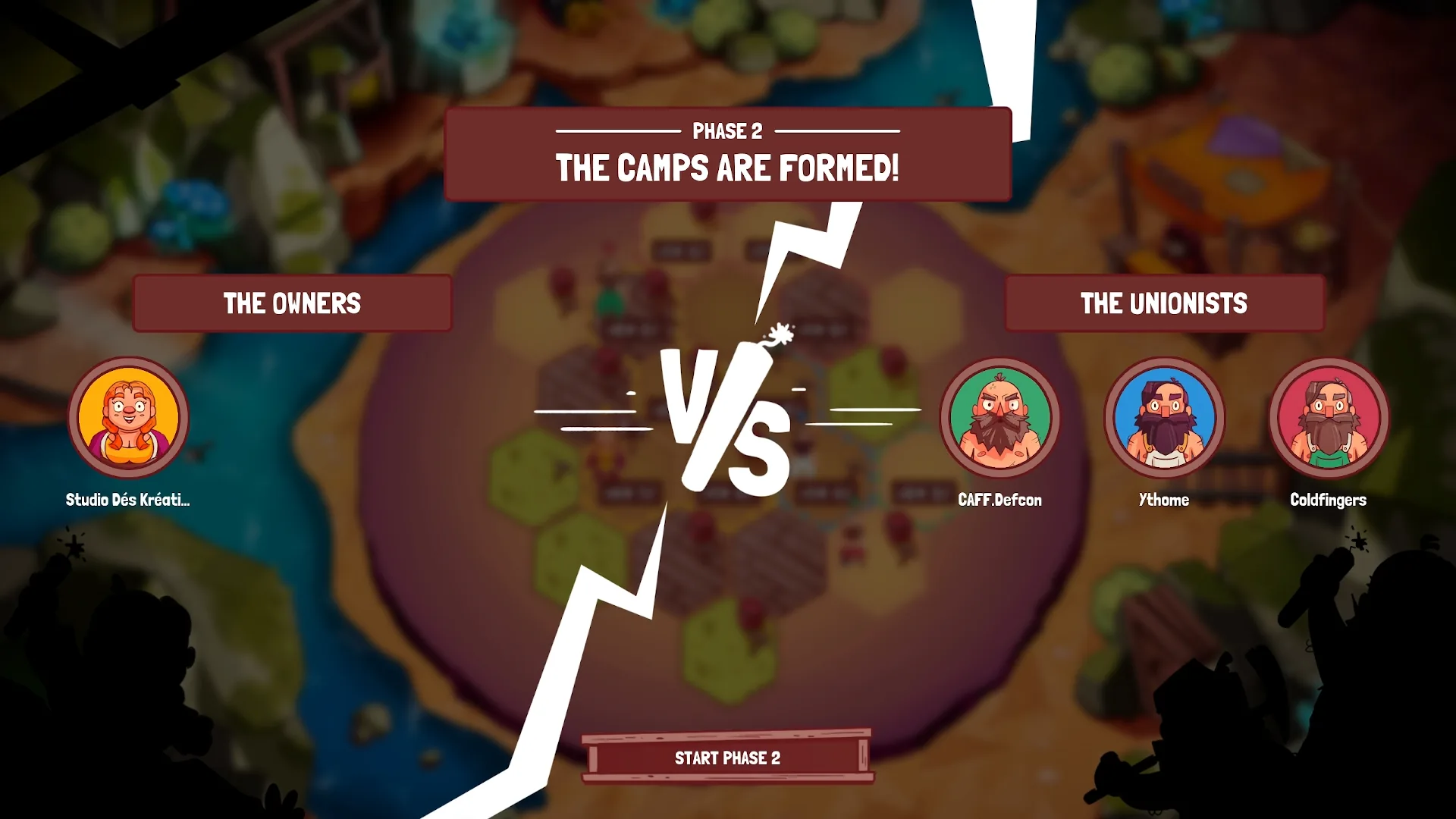
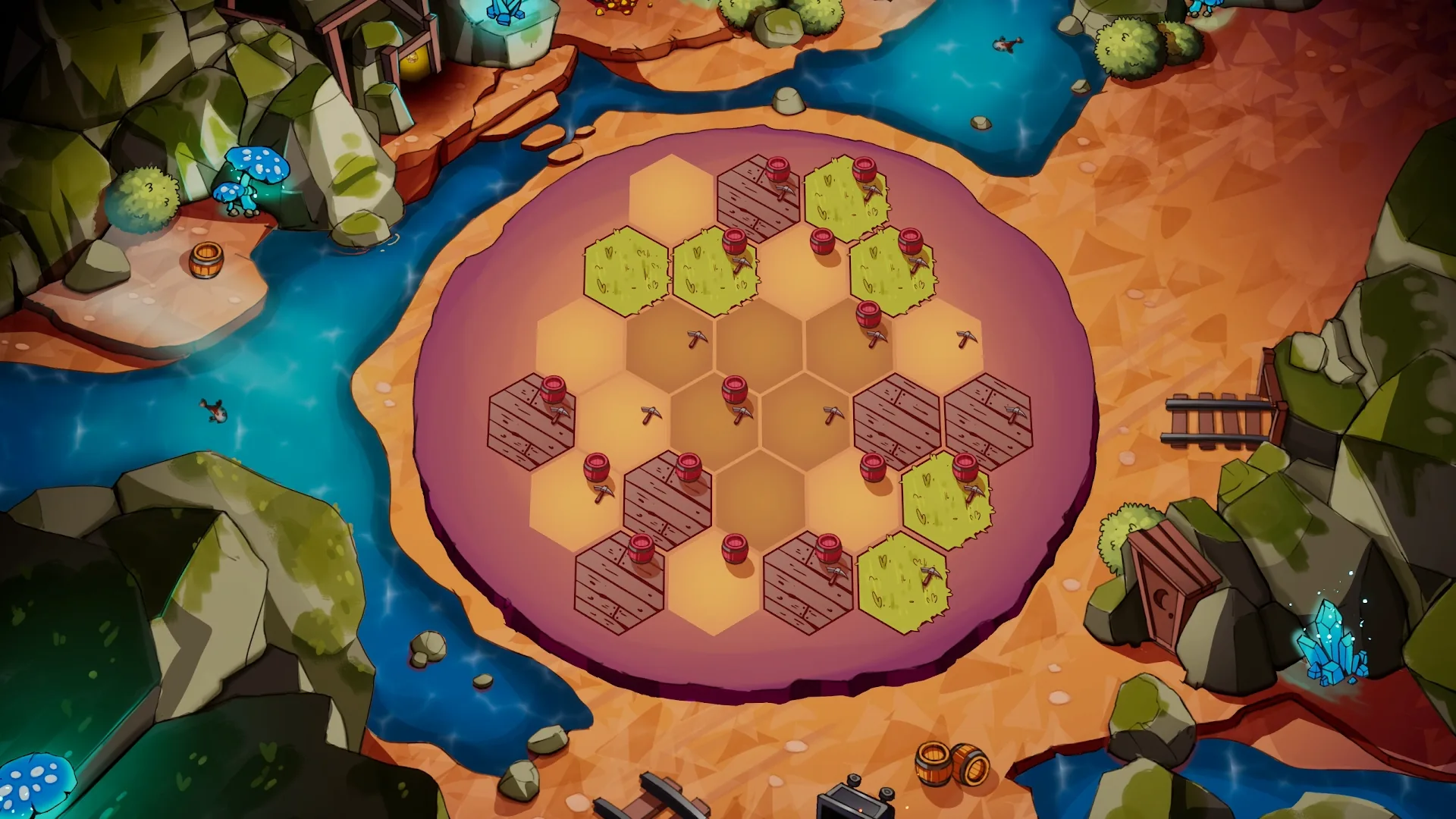
Balancing and length. Early versions suffered from a snowball effect and games that ran too long. We introduced an asymmetric second phase : players who fall behind can form an alliance (the Union) to push back against those leading the pack (the Owners). This mechanic keeps the stakes alive until the end, and it survived every version of the game until it became one of the signatures of the final version.
The pivot to video game. Starting from scratch meant redefining our design objectives for this new medium, switching project management tools, expanding the team with new profiles, and learning a whole new craft : independent publishing.
Learning to ship a game. Beyond game design, À la Mine exposed me to the realities of a commercial release. Product communication, trailer editing, Steam page management, building a relationship with players upstream via Discord, strategic distribution choices. None of that was in my master’s curriculum.
The structuring technical decisions. Three calls shaped the production :
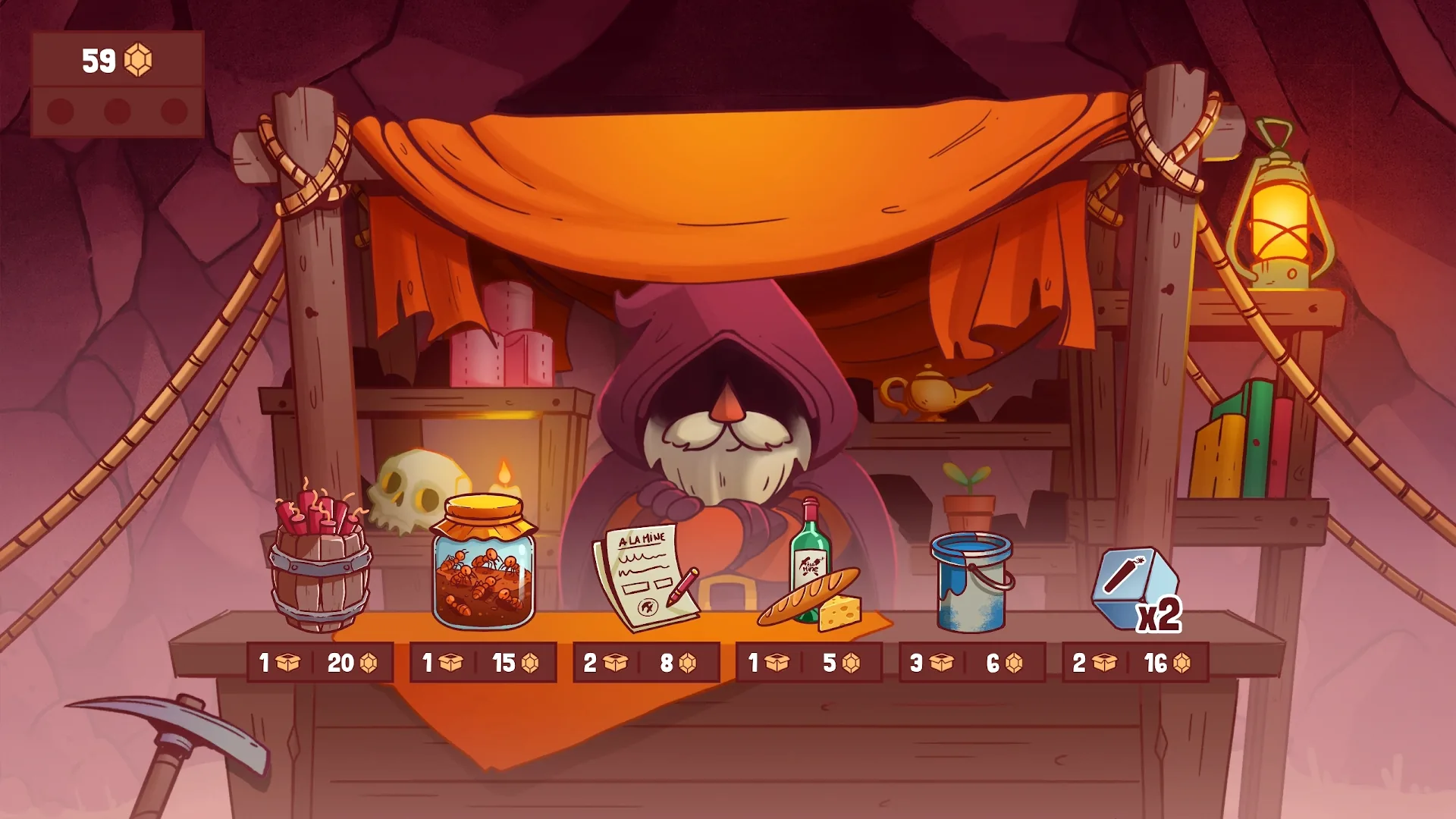
- Native Twitch integration : viewers can influence in-game events in real time and the game’s shop, turning every streamed session into an interactive show. A genuine specificity for a strategy game.
- The Friend Pass : one player buys, their friends can play with them without owning the game. A strategic accessibility choice, lowering the entry barrier for a multiplayer game where finding partners is critical.
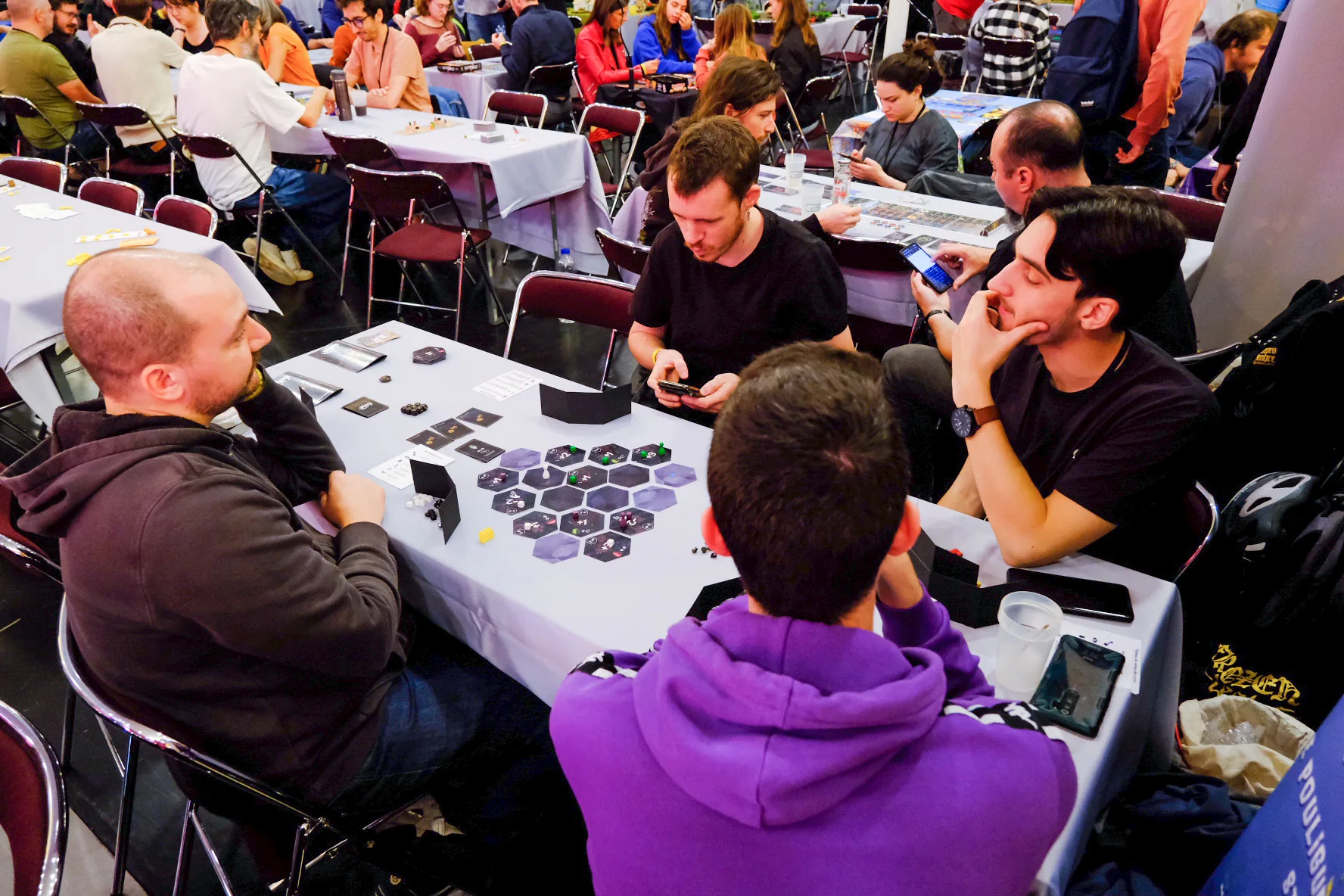
- The fickle multiplayer. For a studio our size, getting stable multiplayer running for 3 to 6 players was one of the most demanding technical challenges of the project.